
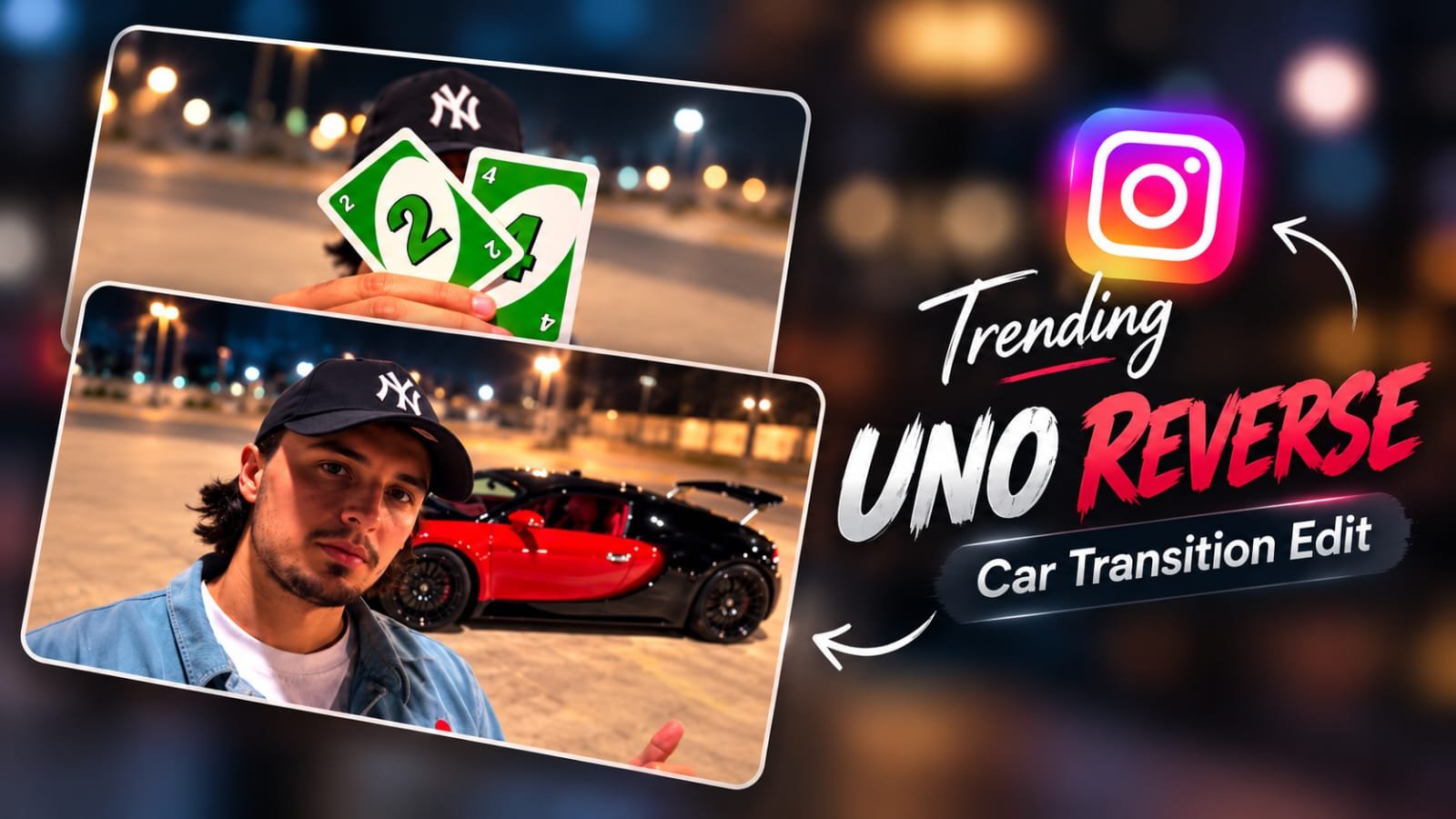
Do you want to make a video like the Uno reverse car transition prompt, then you don’t need to do much, you just need your photo and reference video and a flow ai video prompt with the help of which you can make the video easily, you just need to use the prompt and the ai will do all the work for you, for that you will have to read this article till the end, only then you will understand everything, how to edit your video and how to download the video on your mobile.
What IS Genimi / Chat GPTAi Websites
Gemini AI is Google’s new and advanced artificial intelligence tool, previously known as Google Bard. This platform helps users with various tasks such as writing text, answering questions, generating creative ideas, creating photo editing prompts, and even coding.
The interface of Gemini AI is simple and user-friendly, allowing anyone to get started quickly by logging in with their Google account. Google has specifically designed it to assist in multiple areas like studies, content creation, research, and programming.
Uno Reverse Car Transition Prompt
To create this kind of AI video, simply visit the AI website using the link below and start making your own. At the moment, this style of video is trending everywhere, and everyone is eager to try it out.”

REFERENCE VIDEO LINK
VIDEO PROMPT :-
AI Prompt
Create a **15-second photorealistic vertical 9:16 image-to-video recreation of the uploaded reference video**.
### REFERENCE PRIORITY — CRITICAL
Use the uploaded references as follows:
**REFERENCE IMAGE 1 — MY PHOTO**
Use this as the ONLY identity reference for the main person.
Preserve my exact face, facial proportions, eyes, eyebrows, nose, lips, jawline, skin tone, hairstyle and overall identity throughout the entire video.
**REFERENCE IMAGE 2 — MY CAR PHOTO**
Use this as the exact visual reference for the car.
Preserve the exact car model, body shape, color, paint finish, wheels, headlights, windows, proportions and distinctive details.
**REFERENCE IMAGE 3 — MY CARD PHOTO**
Use this as the exact visual reference for the cards.
Preserve the exact card design, colors, symbols, artwork, proportions and appearance.
**REFERENCE VIDEO**
Use the uploaded video ONLY as the motion and cinematography reference.
Recreate its:
– exact sequence of actions
– timing
– body movements
– hand gestures
– head movements
– camera movement
– framing
– subject positioning
– reveal timing
– interaction between person, cards and car
– final composition
Do NOT copy the identity of the original person.
Replace the original person completely with the person from MY PHOTO.
—
## CONTINUOUS SHOT
The entire video must feel like **one continuous real handheld recording**.
No hard cuts.
No scene transitions.
No teleportation.
No sudden location changes.
Every action must physically continue from the previous action.
Maintain consistent:
– environment
– lighting
– clothing
– face
– hairstyle
– body proportions
– car position
– camera perspective
—
# SHOT TIMELINE
### 0:00–0:03 — OPENING
Start with me close to the camera in the same general composition and environment as the reference video.
I face the camera with a natural, energetic expression.
Reproduce the same subtle head movement and body movement from the reference video.
I behave naturally as though I am speaking to the person filming.
Keep the camera handheld with subtle natural smartphone movement.
Do not introduce the car prominently yet.
Maintain my exact identity from Reference Image 1.
—
### 0:03–0:04.5 — CARD REVEAL
Reproduce the exact card gesture from the reference video.
I naturally raise my hand toward the camera.
The hand moves physically from beside my body toward the lens.
Bring the cards from Reference Image 3 close to the camera.
The cards become a large foreground element and partially cover my face, matching the reference video’s composition.
The cards must remain physically attached to my hand.
Correct:
– finger placement
– hand anatomy
– card thickness
– perspective
– depth
– motion blur
– realistic shadows
Do NOT make the cards appear through a magical effect.
After the reveal, naturally pull the cards away from the camera.
—
### 0:04.5–0:06.5 — CAR REVEAL
As the cards move away, reveal my car from Reference Image 2 behind me.
The car must already exist physically in the environment.
It must NOT suddenly materialize.
I notice the car and turn my head toward it.
Then naturally rotate my upper body toward the car.
Match the timing and direction of the reference video.
Keep the car in the same relative position throughout this section.
The vehicle must retain the exact appearance from Reference Image 2.
—
### 0:06.5–0:09 — SHOWING THE CAR
I gesture toward my car as if proudly showing it to the camera.
Reproduce the same pointing/showing movement from the reference video.
Then naturally turn back toward the camera.
The car remains clearly visible behind me.
Do not change the car design, color, wheels or proportions.
Maintain realistic interaction between my body and the environment.
—
### 0:09–0:10.5 — HAND/FACE GESTURE
Reproduce the reference video’s close hand gesture.
Bring my hand/finger naturally toward my mouth/face.
The movement must be anatomically correct and continuous.
No extra fingers.
No warped hands.
No disappearing fingers.
Maintain my facial identity exactly.
—
### 0:10.5–0:12.8 — EXCITED REACTION
Reproduce the energetic reaction from the reference video.
Turn toward the car again.
Raise my arms/hands in the same excited gesture.
The movement should be quick, natural and physically believable.
Clothing, hair and body movement must react naturally.
The camera should respond with subtle handheld movement.
Do not introduce dramatic cinematic camera movements.
—
### 0:12.8–0:15 — FINAL CAR HERO SHOT
Reproduce the final movement of the reference video.
I move toward the edge of the frame, allowing the car to become the dominant subject.
The camera naturally settles toward the car.
Show the complete car clearly.
My hand may briefly enter from the edge and point toward the car, matching the reference.
End on the car in a strong final composition.
Hold the final shot briefly.
—
# CAMERA
Match the reference video rather than inventing a new camera style.
Use:
– handheld smartphone camera
– eye-level perspective
– natural wide/medium-wide lens
– subtle handheld shake
– realistic autofocus
– slight focus breathing
– natural motion blur
– realistic exposure changes
– authentic creator/influencer video feeling
The camera should feel like a real person is filming this on a phone.
NO:
– drone movement
– crane movement
– 360° camera
– extreme cinematic dolly
– unnecessary zoom
– artificial camera shake
– random camera cuts
—
# REALISM
Photorealistic live-action footage.
Real human anatomy.
Realistic skin texture.
Realistic hair.
Realistic clothing physics.
Realistic hand movement.
Realistic card movement.
Realistic car reflections.
Realistic nighttime/environmental lighting.
Natural depth of field.
Natural motion blur.
The result should look like an actual video recorded in real life, NOT an AI-generated commercial.
—
# IDENTITY LOCK
My face must remain identical to Reference Image 1 from beginning to end.
Do not:
– change my face
– beautify my face
– slim my face
– change my eyes
– change my nose
– change my lips
– change my jaw
– change my skin tone
– change my hairstyle
– change my apparent age
– replace me with another person
Maintain identity even when my face is partially covered by the cards.
—
# CAR LOCK
Reference Image 2 is the absolute source of truth for the vehicle.
Do not alter:
– model
– body shape
– paint color
– wheels
– headlights
– windows
– grille
– proportions
– distinctive design elements
The car must remain the same vehicle throughout the entire video.
—
# CARD LOCK
Reference Image 3 is the absolute source of truth for the cards.
Preserve:
– exact card appearance
– colors
– symbols
– artwork
– dimensions
– orientation
Cards should remain sharp and recognizable when close to the camera.
—
# NEGATIVE INSTRUCTIONS
NO identity drift.
NO face morphing.
NO different person.
NO changing clothes.
NO changing hairstyle.
NO extra people.
NO extra cars.
NO car transformation.
NO changing car color.
NO changing car model.
NO card transformation.
NO floating cards.
NO teleporting objects.
NO disappearing objects.
NO duplicated objects.
NO extra fingers.
NO missing fingers.
NO deformed hands.
NO warped face.
NO body distortion.
NO unnatural limb movement.
NO scene cuts.
NO random transitions.
NO time jumps.
NO slow-motion unless present in the reference.
NO excessive cinematic effects.
NO CGI appearance.
NO cartoon appearance.
NO plastic skin.
NO artificial beauty filter.
NO oversaturated colors.
NO fake-looking reflections.
The final result must look like **the same reference video was recreated with me, my exact car, and my exact cards**, while preserving the original video’s movement, timing, gestures and camera behavior.
How To Use Ai Websites
AI-powered websites are transforming the way users interact online by offering smarter and more personalized experiences. These platforms often provide tailored recommendations, suggesting articles, products, or services that match individual interests through advanced algorithms. Many sites also include AI chatbots that deliver instant support and guidance, making navigation easier. Dynamic personalization further enhances the user journey by adapting the interface and features based on browsing behavior. On e-commerce platforms, AI recommendation engines help users discover products closely aligned with their needs and preferences. In short, engaging with AI websites means taking advantage of intelligent tools that make the online experience more seamless, efficient, and user-friendly.
conclusion
The use of artificial intelligence in websites has transformed the way people interact online, making the experience more personalized, efficient, and user-friendly. With the help of AI algorithms, users receive smart content recommendations, tailored personalization, and real-time chatbot assistance, all designed to match their preferences and needs. By engaging with these features—such as customized suggestions and intelligent recommendation systems—users enjoy a smoother and more interactive digital journey. As AI technology continues to grow, it promises even more advanced and customized experiences, paving the way for a new era in the digital world.